
Pigeons around solar panels are more than an occasional roof nuisance when they keep returning to the same panel edge. For Chermside and North Brisbane homeowners, repeated landings, early-morning noise and droppings below one section of the roof can mean birds are already testing or using the sheltered gap beneath the array.
The useful first step is to work out whether the birds are merely passing through or have started treating the roof as a regular shelter. Once pigeons establish a nesting location, they often return after quiet periods. Proper bird proofing closes the access around the panels so the problem is not left to deterrents that birds may learn to ignore.
Why solar panels make an attractive shelter
Pigeons are not attracted to the electricity produced by solar panels. They are interested in the physical space underneath them. The gap can offer shade, protection from rain, cover from predators and a stable surface for nesting.
North Brisbane’s warm conditions also mean homeowners cannot rely on a long cold season to end the activity. Bird proofing demand is usually strongest from spring into summer, but pigeon problems can continue throughout the year.
This helps explain why a home can develop a problem even after several quiet years. Local pigeon numbers change, nearby roofs may be proofed, and birds may discover a previously unused panel array.
Signs the activity is becoming established
The clearest signs usually form a pattern rather than appearing once. From a safe ground-level position, look for:
- the same pigeons landing near the panel edge every day
- cooing, scratching or flapping around sunrise
- birds disappearing beneath the panels
- sticks or nesting material near the panel perimeter
- droppings below one gutter, wall or paved area
- feathers and debris collecting near the roofline
- one gutter section becoming much dirtier than the rest
Do not climb onto the roof to investigate. On some homes, a safe view from the street, yard or an upper window is enough to see whether birds are entering beneath the array. A professional inspection can confirm the less visible corners and gaps.
The existing guide on how to tell if birds are nesting under solar panels explains the early warning signs in more detail.
What proper solar bird proofing should include
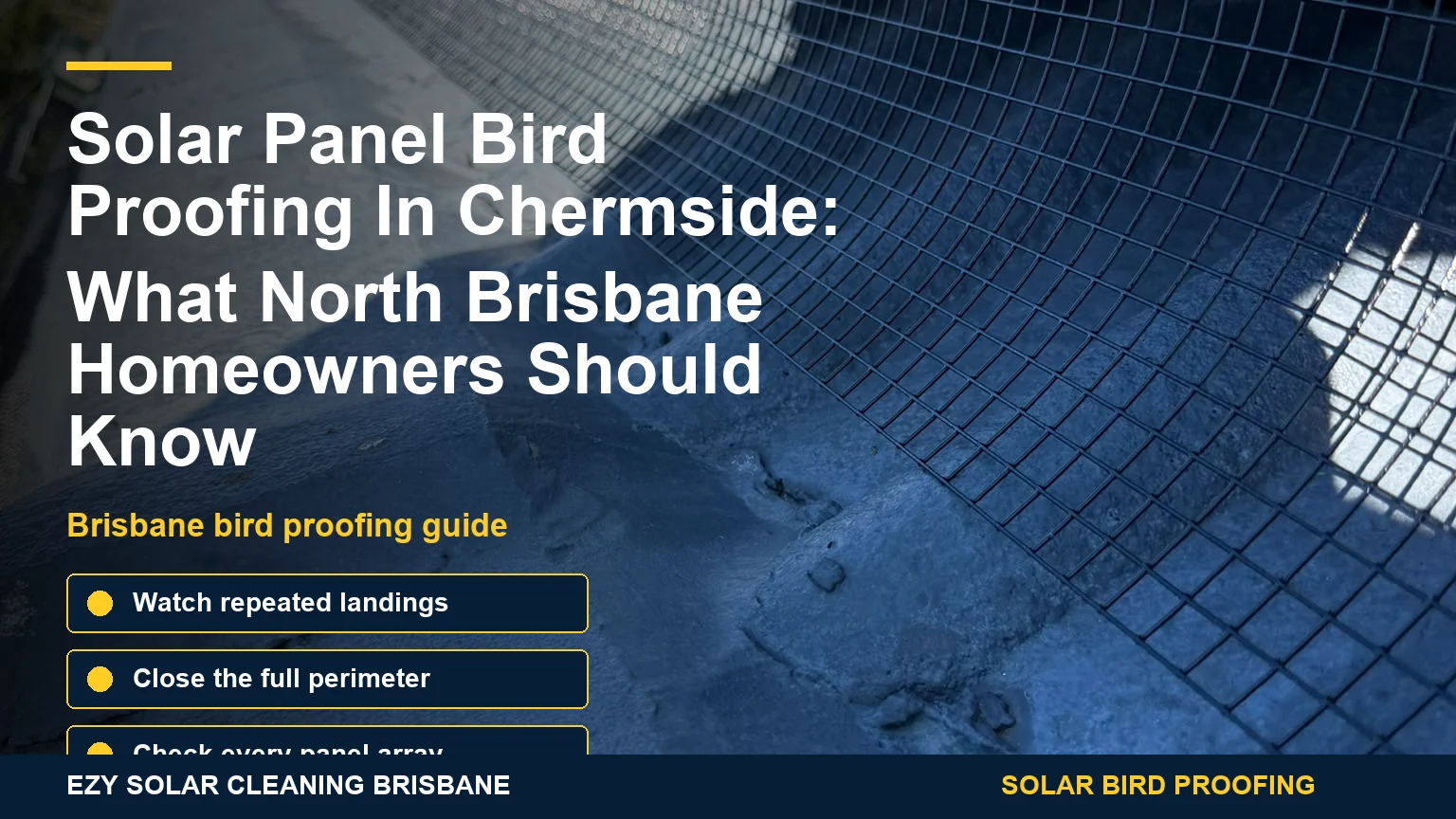
A reliable installation needs to close the complete exposed perimeter of the array. Fitting mesh only along the most visible side can leave access at rear edges, corners or gaps between panel rows.
Quality workmanship usually includes:
- suitable stainless steel mesh with an exterior coating
- stainless steel solar clips where appropriate
- careful shaping around corners and changing roof levels
- attention to gaps between rows and adjoining arrays
- no drilling into the panels or roof
- removal of nests and loose debris where required
- before and after photographs of the work
EZY’s professional solar panel bird proofing in Brisbane is designed to block access beneath the panels while keeping the installation neat against the panel frame.
Why the whole roof layout matters
Many North Brisbane homes have more than one solar array. Panels may be split across two roof faces or installed on both the house and garage. If pigeons lose access to one section but another sheltered array remains open, they may simply move across the property.
This is why a quote should be based on the actual layout, not only the total number of panels. The installer should account for each exposed perimeter, awkward corner and possible entry point.
| Roof situation | What should be checked |
|---|---|
| One rectangular array | The full outer perimeter and all corners |
| Several separated arrays | Every array, not only the one with visible birds |
| Panels on a house and garage | Whether pigeons can relocate to the unprotected roof |
| Gaps between panel rows | Hidden entry points between sections |
| Existing mesh | Loose, damaged or incomplete sections |
Bird proofing and cleaning solve different parts of the problem
Mesh prevents pigeons from getting back underneath the panels. Cleaning removes droppings, dust and organic build-up already present on the panel surface. Nest and debris removal deals with material beneath the array.
If birds have only just started inspecting the roof, there may be little contamination. If they have nested for months, the work can involve considerably more clean-up. Tell the quoting company about visible droppings, gutter mess, smells and nesting material so the scope is clear.
Why quick deterrents often disappoint
Homeowners sometimes try plastic owls, reflective objects, spikes in isolated areas or ultrasonic devices. These products may change bird behaviour briefly, but they do not close the sheltered gap. Pigeons that are attached to a nesting location can become accustomed to them.
Cheap plastic mesh can also struggle in Brisbane rooftop conditions. Strong UV exposure and heat can soften or weaken unsuitable products. Material quality and installation quality both matter because one open corner is enough to provide access.
Getting a useful Chermside quote
Before requesting a quote, gather the suburb, approximate panel count, roof height, number of separate arrays and a few photos taken safely from the ground. Mention whether pigeons are currently entering, whether there is heavy mess and whether cleaning is required.
The Chermside service area pageprovides local service information, while the Brisbane guide to choosing a bird-proofing provider can help you compare what different quotes include.
FAQ
Do one or two pigeons justify bird proofing?
Not every occasional bird means a nest is present. Repeated daily landings, birds entering beneath the panels or growing roof mess are stronger reasons to act.
Will pigeons leave after nesting season?
They may become quiet temporarily, but pigeons often return to a location that has worked for them before.
Is mesh fitted by drilling into the roof?
Professional solar bird proofing should use suitable mesh and clips without drilling into the panels or roof surface.
Can the panels be cleaned during the same visit?
Cleaning may be included or quoted separately depending on the condition of the panels and the agreed scope.
Will the black mesh be obvious from the street?
A neat installation generally follows the panel frame and is much less noticeable than loose improvised materials.
Does every array need protection?
The complete property layout should be assessed. Leaving another suitable array open can give displaced pigeons somewhere else to nest.